UH 惭ā苍辞补’s C-MORE Hale marks 15 years of world-class ocean science
Opened in 2010, the 26,997-square-foot facility has become a hub for groundbreaking research on marine microbes.


Opened in 2010, the 26,997-square-foot facility has become a hub for groundbreaking research on marine microbes.

A study revealed that a wide variety of phytoplankton are not just photosynthesizing; in many cases they are also voracious predators.

More than 30 international microbiologists, including David Karl, call for the world to stop ignoring the “unseen majority” in Earth’s biodiversity.
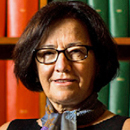
Margaret McFall-Ngai's inaugural article in the Proceedings of the National Academy of Sciences, reveals a newly discovered mechanism by which organisms select beneficial microbes and reject harmful ones.

UH researchers discovered nutrient limitation is a central driver in the evolution of ocean microbe genomes.

UH Mānoa researchers provide evidence that the viruses are actively infecting the many unusual microorganisms that live deep in the rocky crust of the seafloor.

UH Mānoa researcher David Karl and Jens Nielsen from Chalmers University of Technology, developed a computer model to understand the survival of Prochlorococcus.

UH microbiome researchers are poised to get a helping hand from White House.

In the microscopic life that thrives around coral reefs researchers have discovered an interplay between viruses and microbes that defies conventional wisdom.
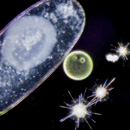
The research highlights the important role played by plankton in the climate system.