Discovery of tenth Tatooine-like circumbinary planet
A team of astronomers, including University of Hawai?i astronomer Nader Haghighipour, will announce the discovery of the tenth transiting circumbinary planet.


A team of astronomers, including University of Hawai?i astronomer Nader Haghighipour, will announce the discovery of the tenth transiting circumbinary planet.

Scientists propose a sensitive technique for detecting photosynthetic organisms in extrasolar planetary systems.
Nader Haghighipour, an astronomer at the Institute for Astronomy, has been elected president of Division F (planetary systems and astrobiology) of the International Astronomical Union.

UH Mānoa Institute for Astronomy graduate H. Jabran Zahid receives award for research on chemical evolution of galaxies.

Doctoral students recognized for excellence in research with unrestricted grants up to $6,000 each.
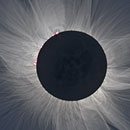
The international Solar Wind Sherpas team braved Arctic weather to successfully observe the total solar eclipse of March 20 from Greenland.

Team of astronomers recently discovered a planetary system orbiting a nearby star only 54 light-years away.
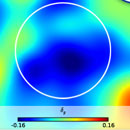
A research team of led by Astronomer István Szapudi discover what might be the largest known structure in the universe that leaves its imprint on cosmic microwave background radiation.

The mission is to protect the natural, cultural and scientific resources of the mountain through community-led management.

R. Brent Tully uses prize to establish the R. Brent Tully Distinguished Visitors Endowed Fund for the UH 惭ā苍辞补 Institute for Astronomy.